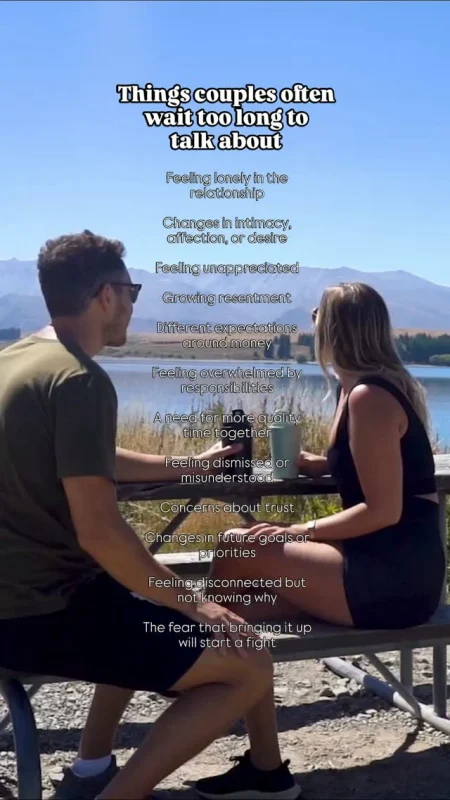
Most couples don’t struggle because they lack communication skills. They struggle because communication in the relationship no longer feels emotionally safe.
For most couples, there isn’t a dramatic moment where communication suddenly breaks. It’s usually harder to pinpoint than that. Something just starts to feel off. Conversations that used to feel easy begin to feel tense, guarded, or strangely exhausting.
In this blog, we’ll look at why you may be struggling to communicate with your partner, what tends to get in the way, and what can help you reconnect.

- Communication is the most common reason couples seek help — 79% of people in a recent OurRitual survey of 8490 respondents named it as a core issue.
- Emotional withdrawal and defensiveness often create a cycle where one partner pursues and the other pulls away, increasing distance over time.
- Creating safety improves conversations. Calm timing, active listening, and “I feel” statements help partners feel heard instead of blamed.
- Small intentional habits like regular check ins or writing thoughts down can break communication gridlock and rebuild connection.
- If conversations stay stuck or repetitive, structured support can help uncover deeper patterns and create healthier communication.
Why does communicating with a partner feel hard?
In sessions, I often hear things like:
“We used to talk about everything.”
“Now it somehow turns into an argument.”
Usually, the change has been building for a while. A few conversations felt tense. There were moments of feeling dismissed. One person shut down, and the other leaned in harder.
Eventually, partners stop responding only to what’s being said. They also start responding to what they expect will happen. If you already expect criticism, defensiveness, or another argument, you may enter the conversation braced for it before your partner has even finished their first sentence.
What do couples often say about poor communication?
When couples begin working on their communication, they often describe the problem through whatever they keep arguing about:
“We fight about money.”
“It’s always chores.”
“It’s parenting.”
But when you slow the argument down, the topic itself can start to fade into the background. One person may genuinely want to resolve the problem and think, “Let’s just talk this through,” while the other is already bracing because previous attempts to talk have felt critical or overwhelming.
Both experiences can be real at the same time.
One partner may enter the conversation expecting criticism, while the other expects to be dismissed. By the time they start talking, both are already tense. That tension affects tone, pacing, and how each person interprets what the other says.
The importance of self-compassion in relationship communication
When we’re emotionally flooded or in a defensive state, even a perfectly worded “I” statement may not get us very far. In those moments, the problem usually isn’t finding better vocabulary. We first need to notice what is happening inside us.
That might mean realizing your body has become tense, noticing that you’re getting defensive, or recognizing that you’ve stopped listening because you already expect the conversation to go badly.
Self-compassion matters here. If every mistake immediately turns into “I’m terrible at relationships” or “I always mess this up,” it becomes much harder to stay open to what your partner is saying. Shame can quickly turn into defensiveness, counter-blame, or shutting down.
Being able to recognize your own limitations without attacking yourself makes accountability easier. You can notice that you were irritable, that you misunderstood something, or that you handled a conversation badly without deciding that this says something terrible about who you are.
These are practices that develop over time. You may notice that you can understand your partner’s perspective after an hour instead of a day, or recover from a difficult conversation a little more quickly than you used to.
What are the key causes of communication struggles in relationships?
A lack of communication in a relationship can come from several different places. Sometimes the problem is what happens during the conversation. Other times, outside stress or old experiences are affecting how each person reacts.
Understanding what tends to derail your conversations can make it easier to figure out what needs to change.
Lack of emotional safety
When conversations stop feeling emotionally safe, people often become more careful about what they say or how much they share. You may spend more time trying to avoid the next argument than actually talking about what is bothering you.
Language matters, but the way you respond to each other matters too. Sometimes a conversation shifts because one person slows down and reflects back what they heard before defending themselves.
“That’s not what I meant.”
“I know. I’m telling you what it felt like on my end.”
Intention and impact aren't always the same. Making room for both can help each partner feel heard without requiring them to agree about everything.
Seeing our partner as stubborn
When conversations keep going badly, it’s easy to decide that your partner is simply being stubborn. The problem with that label is that it makes their response look deliberate, as though they are choosing not to communicate because they don’t care enough to try.
Often, something more complicated is happening.
In a pursue-withdraw cycle, one person tries to regain connection by talking more, asking questions, or pushing for the conversation to continue. The other person feels overwhelmed and creates distance by becoming quiet, leaving the conversation, or asking for space.
Both can be attempts to feel safer. Unfortunately, they also feed each other. The more one person pushes for connection, the more the other may pull away. That withdrawal then makes the first person feel even more disconnected, so they pursue harder.
Dr. Sue Johnson’s work on attachment emphasized how strongly we react when connection with an important person feels threatened. Looking at the pattern this way can create more room for curiosity about what each partner is protecting themselves from.
If withdrawal is a common part of your arguments, you can also read more about communicating with a partner who shuts down.
Getting stuck in mundane conversations
Sometimes communication hasn't completely broken down, but nearly every conversation has become practical. You talk about groceries, work, appointments, children, or what needs to get done, while more personal conversations become increasingly rare.
Usually, both people still want more connection than they currently have. You also don't need to jump immediately from logistics to your deepest conversation. Relationship growth can happen gradually. Sharing something a little more meaningful and having a good experience being heard can make it easier to open up again the next time.
Old Experiences Showing Up in Present Arguments
Sometimes your reaction to a conversation isn't only about what was just said. It may connect to something older, such as growing up feeling unheard, experiencing betrayal in another relationship, or spending years feeling criticized.
Those experiences can affect what you notice and how quickly something feels threatening. When that influence goes unrecognized, an old hurt can quietly become part of a present-day argument.
Emotional flooding
Sometimes you can feel yourself becoming overwhelmed in the middle of a conversation. Your breathing changes, your body feels tense, or you notice that you're no longer really processing what your partner is saying.
This is often described as emotional flooding. Trying to solve the problem while one of you is this overwhelmed can make the conversation harder. Taking a break gives your body time to settle so you can come back to the issue more calmly.
Festering resentment and external pressures
Communication can also change when frustration has been building for a long time. An unresolved argument, feeling taken for granted, or repeatedly avoiding the same issue can affect conversations that seem completely unrelated.
Outside pressure matters too. Work stress, parenting demands, money worries, or simply being exhausted can leave both people with less patience. Sometimes the relationship is where that accumulated stress finally comes out.
A feeling of having the same arguments over and over again
“We’ve had this same fight a hundred times” is something couples often say when an argument has become a pattern.
Usually, the repeated topic is only part of what keeps the fight going. There may be an unmet need or fear underneath it that hasn't been said directly. Inside the argument, though, it can feel like a problem with your partner’s personality: “You always…” or “You never…”
Recognizing the pattern gives you something different to work on besides winning the latest version of the argument.
The Four Horsemen: Four habits that damage healthy communication
The Gottman Institute uses the term “Four Horsemen” for four communication patterns associated with relationship breakdown: criticism, contempt, defensiveness, and stonewalling. The useful part of recognizing them is that each pattern also has an alternative way of responding.
Criticism and its antidote: Using “I” statements
Criticism turns a complaint about something that happened into a judgment about your partner.
Instead of: “You never think about anyone but yourself.”
Try: “I felt overlooked when you made the decision without talking to me. I’d like us to decide together next time.”
Starting with your own experience and a specific request makes it easier to discuss the actual problem without turning it into an attack on character.
Contempt and its antidote: Building a culture of appreciation
Contempt can show up through mockery, insults, sarcasm, or communicating that you are somehow above your partner. Gottman’s research identifies contempt as particularly damaging to relationships.
Instead of: “Of course you forgot. Why would I expect anything else?”
Try: “I was frustrated that this got forgotten. Can we figure out a way to make sure it gets done next time?”
Regularly expressing genuine appreciation can also help stop irritation from becoming the main way partners see each other.
Defensiveness and its antidote: Owning your part
Defensiveness often appears when something feels like an accusation. You immediately explain why it wasn't your fault or point out something your partner did wrong.
Instead of: “I only snapped because you wouldn't leave me alone.”
Try: “I was overwhelmed, but I shouldn't have spoken to you that way.”
Taking responsibility for your part doesn't require taking responsibility for everything that went wrong.
Stonewalling and its antidote: Taking a structured break
Stonewalling happens when someone disengages from an interaction rather than continuing to respond. When you're too overwhelmed to have a productive conversation, continuing to push through it can make things worse.
Instead of: going silent or walking away without explanation.
Try: “I'm getting too overwhelmed to talk properly. I need a break, but I want to come back to this.”
The Gottman Institute recommends taking at least 20 minutes to calm down before returning to the conversation.
Practical steps to reconnect with your partner
You don't need to fix your entire communication pattern in one conversation. Small changes in how conversations begin, pause, and end can make it easier to create a different experience together. For a deeper guide, you can also read about how to improve communication in a relationship.
Check the timing before difficult conversations
A conversation is much harder when one of you is exhausted, distracted, rushing out the door, or already upset. Before raising something important, check whether you both have the capacity to talk about it. Waiting for a better moment isn't the same as avoiding the issue.
Lead with vulnerability instead of blame
Be kind, clear, and respectful about what you need to say. Speak from your own experience rather than telling your partner what is wrong with them. You can tell the truth and still pause if either of you becomes overwhelmed. Name-calling and character criticism should stay out of the conversation.
You can read more about discussing difficult issues without turning them into arguments.
Pause and reset when you feel flooded
If you notice that you're no longer listening or you're becoming increasingly reactive, say so. A simple “I’m getting overwhelmed and need a break” is clearer than disappearing or shutting down. Agree on when you'll return so the break doesn't feel like the conversation has simply been abandoned.
Practice active listening: Listen to understand, not to reply
Before explaining your side, make sure you've actually understood your partner's. Reflect back what you heard or ask a question before responding. This is particularly useful if you notice yourself listening defensively and preparing your rebuttal while your partner is still speaking.
Use “upside-down” training: Start small to build trust
Learning to communicate differently can be a bit like learning a handstand. First you get comfortable being upside down. Then you build strength. Eventually, you find your balance.
Start with conversations that feel manageable. Having a positive experience sharing something meaningful and being heard makes it easier to take a bigger emotional risk later.
Identify what typically sparks your communication breakdowns
Look for patterns rather than waiting for the next argument. Maybe conversations go badly late at night, when one of you feels criticized, or when a particular topic comes up. Knowing what tends to set the cycle in motion gives you a chance to respond differently earlier.
These aren't tips to check off once and forget. They're practices that develop over years of being in a relationship.
How do you know when communication problems need outside help?
Sometimes effort isn't the problem. Both partners are trying, but they keep ending up in the same emotional ruts.
Signs that communication may need more attention include avoiding important conversations because you expect them to become arguments, regularly feeling unheard or dismissed, shutting down during conflict, or having the same fight without ever reaching a resolution. If communication problems are also affecting your emotional closeness or everyday life together, it may be worth getting some outside support.
You don't have to wait until you're questioning the future of the relationship. Having someone outside the dynamic can make it easier to see patterns that are difficult to recognize while you're caught in them.
OurRitual offers relationship support for couples who want help working on communication, conflict, and connection. You'll meet with a relationship Expert and have a personalized Pathway with videos, exercises, and other tools to continue the work between sessions.
If there is abuse, coercion, or an immediate safety concern in the relationship, relationship exercises or communication work should not be the first step. Use appropriate professional or emergency support. You can find resources on OurRitual's emergency resources page.
If you're ready to work on the way you communicate together, you can get started with OurRitual.