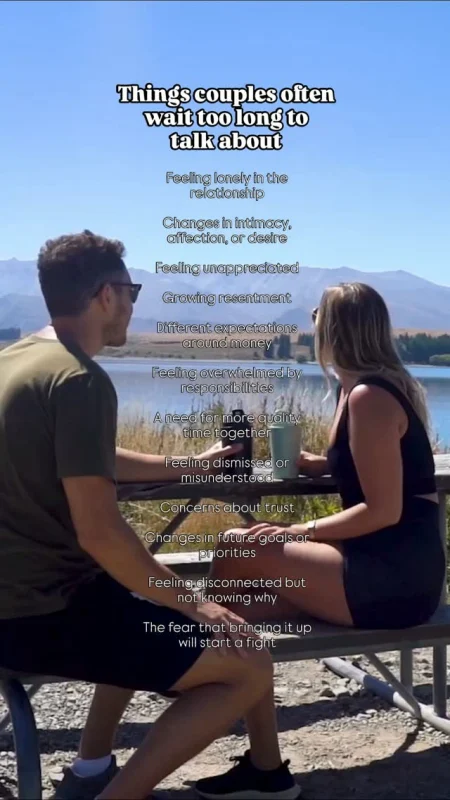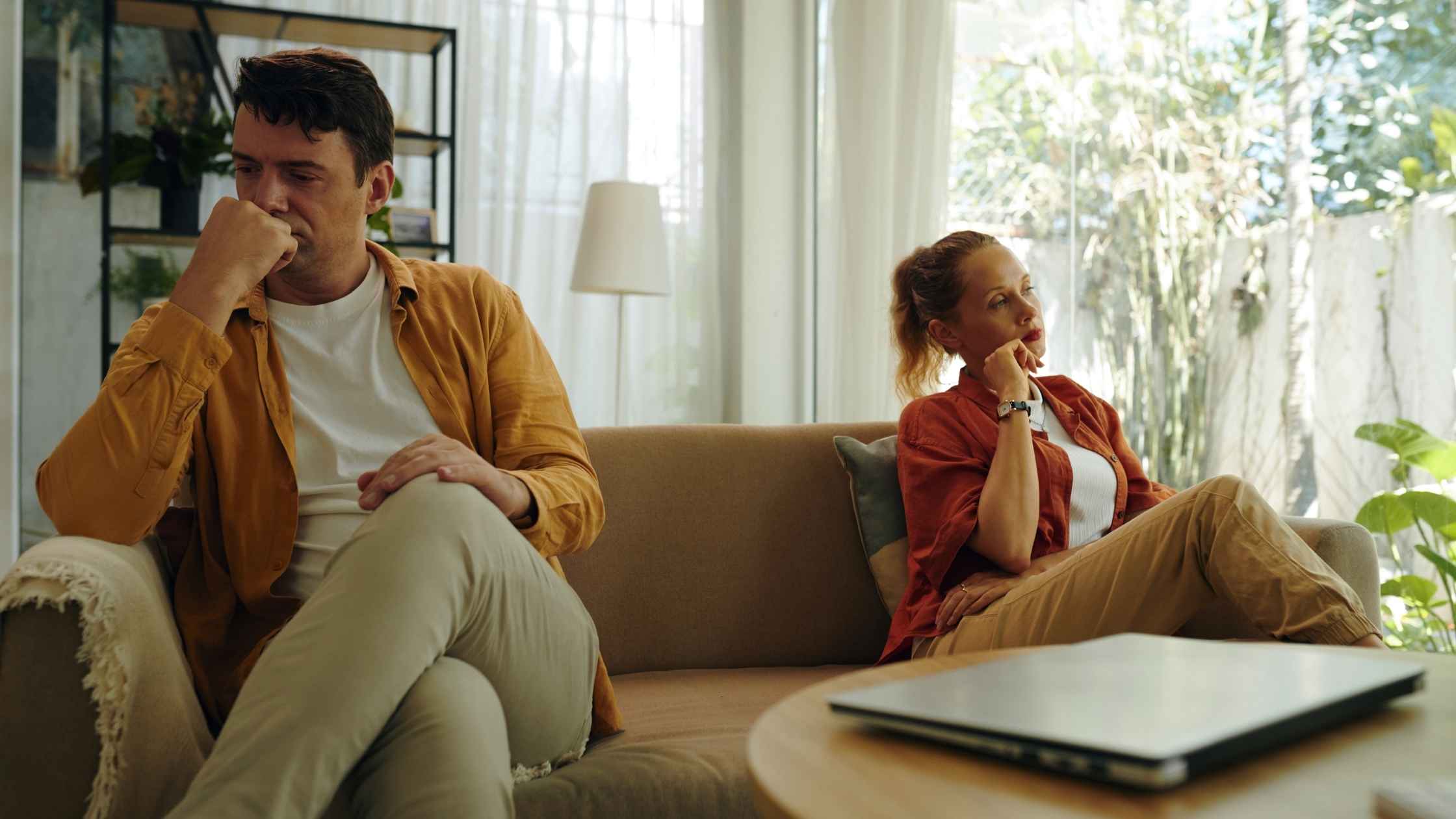




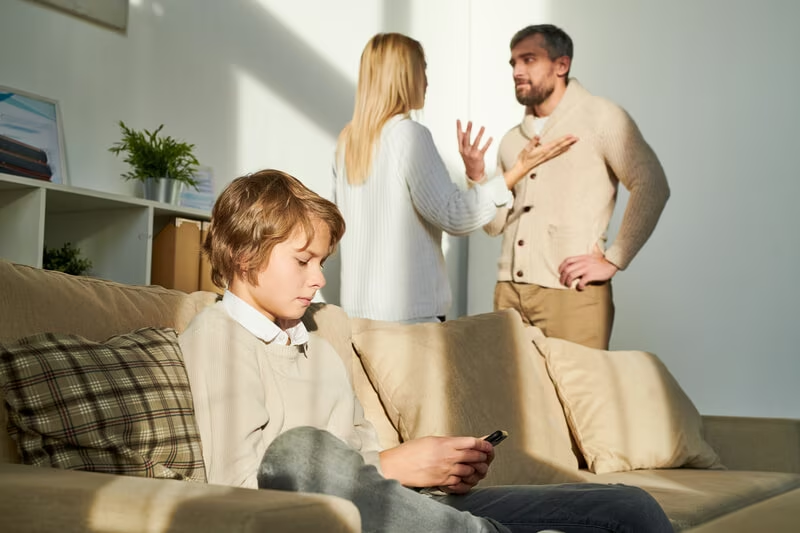


Every week, I sit across from couples on video calls who tell me some version of the same thing: “We keep having the same fight.” A military couple stationed on different continents. Two new parents who haven’t slept in weeks. A pair of college sweethearts is wondering if they’ve grown apart. The details change. The pattern almost never does.
After working with hundreds of couples over the past decade, I can tell you this with confidence: conflict itself is rarely the problem. The way you and your partner navigate conflict determines whether your relationship grows stronger or slowly erodes.

• Conflict itself is not the issue, how couples handle it determines whether they grow closer or drift apart
• Most arguments follow a repeated cycle, and simply noticing and naming that pattern can start to break it
• Healthy conflict moves from attack to acknowledgment to collaboration, where both partners take responsibility and work toward understanding
• Recurring fights are usually about deeper emotional needs like feeling valued, safe, or respected, not just the surface issue
• Building simple shared tools, like taking breaks, using repair phrases, and having regular check-ins, helps couples handle conflict more effectively over time
This guide shares the conflict-resolution strategies I use in sessions and those I assign between sessions. These are the same methods that our team of over 300 OurRitual Experts uses daily with couples across every background, relationship stage, and life circumstance.
What Conflict Resolution Actually Looks Like in a Relationship
Conflict in relationships is the friction that builds when two people with different communication styles, priorities, and stress responses try to share a life. You will disagree about money, parenting, chores, intimacy, boundaries, and a hundred smaller things. That is a given.
In my practice, I see that happy and unhappy couples fight at roughly the same frequency. The difference is in what happens during and after the fight. Couples who resolve conflict well leave each disagreement having learned something new about each other. Couples who resolve conflict poorly leave each disagreement feeling more alone.
I worked with a long-distance couple last year. They argued every Sunday night before the start of the work week. She felt he was emotionally checked out. He felt she was constantly criticizing him. In our sessions, we discovered they were both scared of the same thing: that the distance was pulling them apart. Once they could name that fear together, the Sunday fights stopped being attacks and started being honest conversations.
You know conflict has been resolved well when you walk away from the conversation having:
- Learned something about your partner you did not know before
- Felt respected and emotionally safe throughout
- Gained or restored genuine appreciation for each other
- Accepted that disagreement is a normal part of a healthy relationship
Sounds pretty good, doesn't it? Here's how to tap into successful conflict resolution in your relationship.
1. Name the Cycle Out Loud
This is the single most important skill I teach in sessions. Conflict runs in cycles. Regardless of the topic, most couples repeat the same emotional sequence every time they argue.
I had a session recently with a couple who had been married for 14 years. She would raise a concern. He would go quiet. She would escalate. He would leave the room. She would follow him. He would say something harsh. She would cry. They had played this out hundreds of times. The topic changed. The choreography never did.
I asked them to describe the pattern back to me, step by step. When they heard themselves say it out loud, both of them paused. He said, “I didn’t realize I always walk away first.” She said, “I didn’t realize I always follow.”
That awareness is the first exit from the cycle. You can practice it with simple language:
- “Hey, I think we’re doing our thing again.”
- “This is starting to feel familiar. Can we slow down?”
- “I’m noticing I’m raising my voice. I want to stop and try again.”
The delivery matters. Go gentle. A little self-awareness, even a small, self-deprecating observation, can shift the entire temperature of the room. I encourage couples to practice identifying their cycle between sessions using the exercises available in the OurRitual app. The video content and guided prompts help you recognize your patterns even when your therapist is not on screen.
2. Move from Attack to Acknowledgment
In my clinical work, I see conflict move through three predictable stages: attack, acknowledge, and collaborate. Understanding where you are in this sequence gives you a map for getting through it.
The Attack Stage
This is the stage where emotions run the show. You are talking over each other. You are focused on your own point. You are not listening. Your nervous system is in fight mode.
I see this across all types of couples. LGBTQ couples, heterosexual couples, dating couples, and married couples. It looks the same. One partner says something sharp. The other fires back. Or one partner shuts down completely, which feels just as aggressive to the person left talking to silence.
A parent couple I worked with last month described it perfectly. She said, “By the time the kids are in bed, I’m so drained that anything he says feels like a demand.” He said, “And anything she says sounds like a complaint.” They were both right. They were also both in attack mode before the conversation even started.
The Acknowledge Stage
This is where repair begins. Tension starts to lower. You access the empathetic, reflective parts of your brain again. You start to hear your partner instead of preparing your rebuttal.
Acknowledgment sounds like:
- “I’m sorry I cut you off. That was disrespectful.”
- “I know I got heated. That is not fair to you.”
- “I can see why it’s frustrating when I keep repeating myself instead of listening.”
The critical skill here is keeping the focus on your own behavior. In session, I watch for the word “but.” As soon as someone says, “I’m sorry, but you always...” they have left the acknowledge stage and returned to attack. The same applies to “because.”
“I’m sorry for yelling, but you never listen” is an attack disguised as an apology.
“I’m sorry for yelling. I want to do better” is an acknowledgment.
If you find yourself sliding back into attack, take a break. I recommend 30 to 60 minutes. Go for a walk. Do a breathing exercise. Use a self-regulation tool from the OurRitual app. The goal is to calm your nervous system enough to come back to the conversation with genuine openness.
3. Collaborate on What Comes Next
Once both partners have acknowledged their contributions to the conflict, you are ready to collaborate. This is the stage where practical problem-solving happens.
Start by checking in: “Is there anything I missed? Anything else you need me to understand?”
This step is where I’ve seen some of the most valuable breakthroughs in session. A partner might mention that you swear during arguments, and it makes them feel unsafe. Or that you get physically close when you’re upset, and they need space. These are specific, actionable pieces of information that change how you handle conflict in the future.
Then ask together: “Do we need a solution here, or did we just need to be heard?”
Sometimes the answer is that no logistical fix is required. The conflict was about feeling disconnected, and the conversation itself was the repair. Other times, there are concrete steps to take: dividing household responsibilities differently, setting a weekly check-in, adjusting how you communicate when one partner travels for work.
I worked with a military couple who argued every time the service member came home on leave. The civilian partner felt abandoned. The service member felt guilty. In our sessions, we identified the real issue as a lack of a transition ritual. They started scheduling a low-pressure dinner on the first night back, with no expectations. The arguments dropped significantly.
4. Recognize When the Topic Runs Deeper
Some conflicts are about the dishes. Many are about something else entirely.
In my experience, recurring arguments almost always stem from a deeper emotional need. A fight about screen time with the kids is often a fight about feeling like an equal partner in parenting decisions. A fight about spending habits is often a fight about security and trust. A fight about how often you have sex is often a fight about feeling desired and valued.
I had a couple in session who argued constantly about the thermostat. It sounds trivial. When we explored it, the temperature fight was a proxy for a much larger dynamic: one partner always accommodated, and the other always decided. The thermostat was the symptom. The pattern of control was the issue.
At OurRitual, our Experts are trained to help you identify these deeper layers. With over 300 relationship therapists on our team, each with years of specialized training, we work with couples on everything from communication breakdowns to infidelity, trust repair, toxic relationship patterns, boundary setting, and intimacy concerns. The in-app exercises between sessions reinforce what you learn in therapy, so progress does not stall between calls.
5. Build a Conflict Toolkit as a Couple
The couples who manage conflict best are the ones who prepare for it. They do not wait for the next argument. They build shared agreements about how they want to handle disagreements.
In my practice, I guide couples through creating what I call a Conflict Toolkit. It includes:
- A safe word or phrase. Something either partner can say to pause the conversation without it feeling like withdrawal. One couple I work with uses “yellow light.” It means: I’m getting overwhelmed, let’s slow down.
- Agreed-upon time-out rules. How long is the break? Who initiates it? What does each person do during it? Without clear agreements, a time-out can feel like abandonment.
- A check-in ritual. Many of my clients set a weekly 15-minute check-in where they share one thing that went well and one thing they want to work on. It prevents resentment from building quietly.
- Repair phrases. Sentences you both agree on mean “I want to fix this.” Examples: “Can we start over?” “I love you even when this is hard.” “I’m on your team.”
OurRitual’s approach to couples therapy is built around this idea. Expert-guided sessions give you the framework. The app’s exercises and video content between sessions help you put that framework into daily practice. It is a combination of clinical guidance and a tailored digital experience designed to support continuous growth.
6. Adapt Your Approach to Your Relationship
Conflict resolution is not one-size-fits-all. The strategies that work for a couple living together differ from those that work for a long-distance couple or a couple co-parenting after separation.
Long-distance couples often need more structured communication rituals because spontaneous repair is harder when you cannot reach across the couch and hold a hand. I recommend scheduled video calls specifically for tough conversations, separate from your regular catch-ups.
Military couples deal with unique stressors: deployment, reintegration, long separations, and the emotional weight of service. Conflict resolution here often starts with acknowledging the context. Telling your partner, “I know this transition is hard for both of us,” goes a long way.
Parents frequently argue when they are exhausted and overstimulated. I advise parent couples to avoid serious conflict discussions after 9 PM. Your capacity for empathy drops sharply when you are sleep-deprived.
LGBTQ couples sometimes face added layers of stress from external factors: family acceptance, social environments, and legal concerns. These stressors can intensify internal conflict. Recognizing when an argument is actually about external pressure, and naming that together, is a skill I work on frequently with LGBTQ clients.

.avif)

.avif)
.avif)
.avif)
.avif)
.avif)