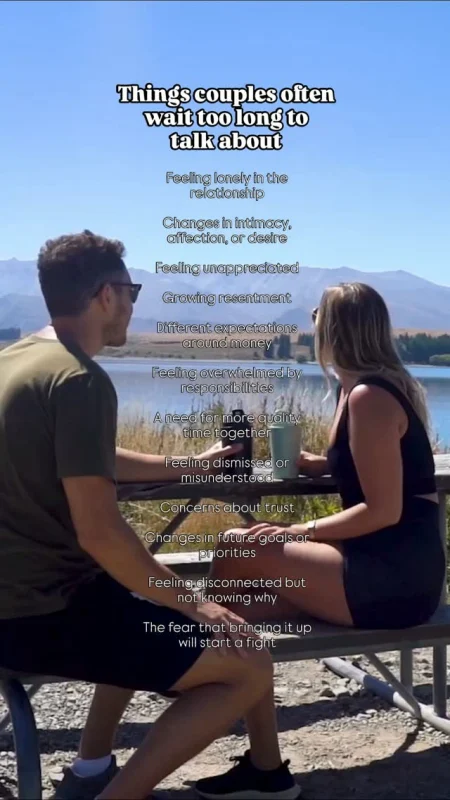






I hear this in sessions all the time. One partner says, “We still talk, we still eat together, but it feels like we’re roommates.” The other usually nods. Sometimes quietly. Sometimes with relief. This is a pattern I see often. In most cases, it comes down to one thing: physical closeness has declined. New data from a 2026 OurRitual survey shows 70% of couples dealing with intimacy issues say it's urgent to address, yet 54% say they rarely feel heard by their partner, and 55% say they don't feel understood. That gap is where the problem lives.
Physical intimacy does not look the same for everyone. For some couples, it is sex. For others, it is smaller moments. A hand on your back in the kitchen. Sitting close on the couch. A long hug before bed.

- Physical intimacy includes more than sex, it also involves everyday closeness such as touch, proximity, affection, and other forms of contact that help partners feel safe, connected, and supported
- When physical intimacy declines, couples often experience effects such as lower self-esteem, communication difficulties, and growing emotional distance within the relationship
- Rebuilding intimacy often begins by broadening the meaning of intimacy beyond sex, reintroducing low-pressure affectionate touch, understanding what helps desire grow, and seeking professional support when deeper patterns are involved
- In an OurRitual survey of 8660 people seeking relationship support, 87% of those who named intimacy as a core issue also named communication — showing how tightly the two are linked
When those moments fade, something shifts. The relationship starts to feel less steady. Less connected. Over time, that shows up in how you talk, how you feel about yourself, and how much you feel like a team.
In this blog, we discuss the effects of a lack of intimacy in a relationship and how to fix intimacy issues.
What Are the Effects of Lack of Physical Intimacy in Relationships?
Some people describe a low, steady sadness. Nothing dramatic, but something feels off most of the time. Others start questioning the relationship itself. They wonder if something has changed or if the connection is slipping.
I worked with a couple who spent long periods apart. They handled the distance. What caught them off guard was how disconnected they felt when they were finally together again.
For some couples, there is added pressure around touch. When affection has felt judged or uncomfortable in the past, people pull back faster. It becomes easier to avoid it than to deal with the tension around it.
Even with all these differences, one thing comes up again and again. Something feels missing. Both partners feel the gap, even if they talk about it in different ways.
A lack of physical intimacy is not a reason to cheat or to change the structure of the relationship without clear agreement from both people.
I have heard partners explain their choices by pointing to months without closeness. I understand the pain behind that. At the same time, those choices tend to create more damage. Honesty and consent still matter, even when things feel distant.
Lower Self-Esteem and Self Worth
A few months ago, I was meeting with a couple over video. The partner who had been initiating physical contact for months without much reciprocation told me, "I’ve started to wonder if there’s something wrong with me. Like maybe I’m just not attractive anymore." That sentence stopped the other partner cold. They had no idea their withdrawal had been interpreted that way.
For many people, touch from a partner signals something simple. “You want me. You like me.” When that disappears, people start filling in the blanks on their own. They question how they look. How do they come across? Whether they are still wanted. Over time, that thinking does not stay contained to the relationship. It spills into everything else.
In some cases, people start looking for reassurance outside the relationship. I have seen this with younger couples and with couples who have been together for many years.
The pattern tends to repeat. Needs are not spoken. Hurt builds up. Someone looks elsewhere to feel wanted again.
Communication Breakdown and Emotional Distance
Many people treat intimacy and communication as separate problems. In practice, they overlap. When physical closeness drops, conversations often change, too. One couple put it simply. “We used to talk without thinking. Now we avoid starting.”
Physical closeness involves letting your guard down. When that stops, emotional openness often drops with it. It becomes harder to say what you need. Harder to admit when something feels off. Even small things stay unspoken.
I worked with a couple who kept arguing about chores. On the surface, it was about dishes and schedules. In session, both said they had not even sat next to each other in weeks. The arguments were not the main issue. The distance was.
Between sessions, I encouraged them to use OurRitual’s app exercises focused on daily check-ins and structured vulnerability prompts. Within a few weeks, both partners reported that conversations at home had shifted. They felt less defensive and more willing to listen.
Loneliness Inside the Relationship
Feeling lonely in a relationship hits differently. One client told me, “I feel more alone here than when I’m by myself.” That feeling tends to build slowly. Less touch. Fewer small moments. More distance.
Closeness builds over time. When it is there, people reach out to each other more without thinking. When it is not, the opposite happens. One person tries, gets turned down, tries again, then slowly stops. Not all at once, but over time. What matters is how those moments land. If the response feels dismissive or critical, it sticks. People start protecting themselves by pulling back. After a while, the distance becomes normal. You end up in the same room, doing your own thing, not really connecting.
Saying no to closeness is part of a healthy relationship.
The issue comes when the refusal also dismisses the other person.
“There’s not a good time tonight” lands differently than “Why do you always need this?” One sets a limit. The other creates distance.
How to Rebuild Physical Intimacy in a Relationship
Rebuilding physical intimacy is possible, and I have watched hundreds of couples do it. The path forward usually starts with a shift in focus. Many couples get stuck debating how often they have sex.
Based on data from thousands of couples using OurRitual, women aged 25–34 make up the largest group seeking support around intimacy, 38% of respondents working on this issue. The patterns they describe are consistent: feeling unheard, wanting more affection, and not knowing how to start the conversation.
In my sessions, I redirect that conversation toward what helps each partner feel open to physical connection in the first place. For some people, desire is spontaneous: it just shows up. For others, desire emerges after feeling emotionally safe, relaxed, or genuinely heard. Understanding which type you and your partner experience changes everything.
I recently worked with a couple where one partner had high spontaneous desire and the other experienced responsive desire almost exclusively. They had been fighting about frequency for over a year. Once we identified this difference in our sessions, the partner with spontaneous desire stopped interpreting the other’s slower pace as rejection.
The partner with responsive desire started communicating what conditions helped them feel open to closeness. Within a couple of months, both reported feeling more satisfied, even though the actual frequency hadn’t changed dramatically. You can read more about this process in our guide to rebuilding physical intimacy.
Expanding what counts as intimacy helps a lot.
Touch without pressure makes a difference. Sitting close. Holding hands. A longer hug before bed. These moments help people feel safer with each other again.
Many couples drop these habits when tension builds, which worsens the distance.
Reintroducing low-pressure affectionate touch is often the fastest path back to warmth and closeness.
When hurt or resentment has built up, outside help often makes things easier.
In sessions, both partners get space to speak openly about closeness, boundaries, and needs. Between sessions, structured therapy exercises help keep the work going at home.
In live sessions, a therapist provides a safe, neutral space where both partners can talk openly about their needs around closeness, boundaries, trust, and desire. Between sessions, couples can use the OurRitual app for targeted exercises and video content that reinforce progress and keep momentum going throughout the week.
This combination helps couples move past surface-level arguments about rejection or frequency and into a shared understanding of what intimacy means to each of them emotionally, physically, and psychologically.
With the right support, many couples discover that intimacy returns stronger than before: more secure, more flexible, and more deeply satisfying.

.avif)

.avif)
.avif)
.avif)
.avif)
.avif)