





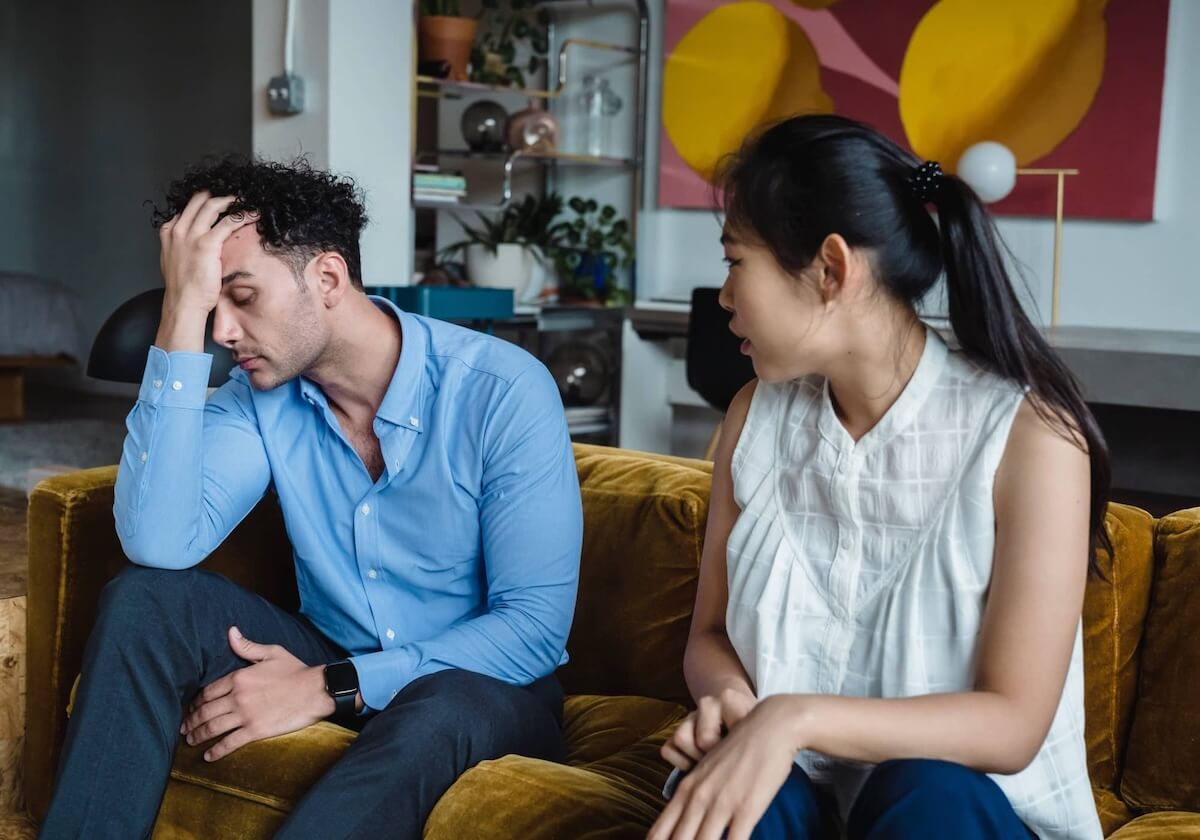

Conflict is a natural part of being in a relationship, and as a parent, it can be easy to fall into a cycle where conflict becomes more the norm than the exception. Although conflict (when done well) is normal, the frequency, intensity, and duration of your conflict could be damaging to your child's long-term mental health. The Expert team at OurRitual is here to help you identify how parental conflict may impact young people in your home, and what to do about it.
How does arguing impact young people?
During development, a young person's brain goes through immense change. You can see it in the way they handle problems, learn new skills, and interact with others. Less obvious, however, is their development of a sense of self and safety.
Especially in early childhood, young people are constantly trying to answer the fundamental question: "Am I safe and supported?" After all, it makes sense: because children cannot look after their own needs independently, they rely on their caregivers for sustenance, attention, and care.
What we may not realise, however, is that alongside this reliance, young people struggle to differentiate between a parent's emotions and their own. Young people are still developing a theory of mind, the awareness that others' emotions and perspectives are not necessarily the same as their own or about them.
Put simply, children are not just "little adults", and any brain scan would support this fact. Children's brains are highly plastic (receptive to new information as they grow), and they are constantly assessing safety.
This is why childhood can have such a massive impact on a person's mental health: as well as needing to rely on their parents, children also tend to believe that their parents' emotions are a reflection of them. And in their mind, it seems rational - if mom or dad is angry, it seems clear that they must have done something wrong.
Keeping this in mind, it makes sense that being exposed to parental fighting is so harmful to kids. The child internalises a sense of being an issue and feels less safe at home. This shapes their development, future relationships, and long-term mental health.
Fighting effects on teenagers
Clearly, parental conflict has a major impact on the trajectory and well-being of the young person's life. It is important to acknowledge, however, that the impacts of conflict vary over time. For teenagers, the impact becomes less about dependency and more about identity and trust.
During adolescence, young people make sense of their own identity and relationships with other people. Parental fighting can lead teenagers to disengage, become cynical about relationships, or even engage in more risk-taking behaviour.
The key distinction is that while young children internalise the conflict into themself, teenagers often position themselves against it. Contempt and resentment from teenagers can build easily when conflict isn't well-managed.
Teenagers are also much more aware of inter-parent dynamics. Conflict could actually be more stressful for them because they have to consider the dual relationships they have with their parents. Siding with one parent could lead to guilt or feelings of betrayal for the other.
Regardless of developmental stage or age, parental conflict is something that can cause not only these immediate impacts but also many long-term effects on their mental health.
Long-term effects of parents fighting
The effects of parental conflict on young people have been extensively documented over many decades. Consistent exposure to intense arguments between parents during development has been shown to result in a wide range of negative mental health outcomes:
- Mood disorders. When parents are fighting, attention inevitably goes away from the child. Children need caregivers to reflect back a sense of worth and love. A child may develop depression or anxiety due to sustained stress, loneliness, or neglect here.
- Relationship issues. Children first learn to interact with their parents. If they grew up experiencing poor communication and conflict resolution, they will likely develop the same skills in future relationships.
- Lower self-esteem. A child may begin to feel like they are the problem, especially if the conflict is over parenting styles. This can lead to a sense of being a burden or to feeling like too much "work" for other people.
- Behaviour problems. Parenting conflict is associated with numerous behavioural difficulties, such as aggressive behaviour at school. Children may copy the fighting behaviours of adults.
- Substance use/poor coping strategies. An essential part of parenting is teaching children how to self-regulate their own moods and emotions. If conflict is the norm, children may not learn the proper self-regulation techniques and turn to substances or other coping strategies to numb their mood in adulthood.
What is damaging parental fighting?
The key distinction between healthy and damaging parental fighting boils down to three variables: frequency, duration, and intensity.
- Frequency. When fighting is a daily or frequent occurrence, the child gradually becomes anxious, expecting the next conflict to be just around the corner.
- Duration. Lingering, improperly handled conflict can damage a child's sense of stability. After all, if they can't rely on their parents to be at peace, how can they expect to be?
- Intensity. Conflict that is overly heated or harmful will obviously have a greater negative impact on a child's development. Intense conflict also "teaches" the child that destructive forms of conflict are supposedly OK.
Importantly, all three variables interact to determine the impact of conflict on the child and can send clear messages about what a loving relationship looks like. When it comes to harmful behaviours, the following actions are particularly damaging to a child's well-being:
- Sustained yelling, shouting, or screaming
- Threatening divorce or separation
- Insults, name-calling, offensive language
- Physical violence
- Aggression
- People-pleasing (i.e, giving in just to resolve the conflict)
Remember to keep in mind that children struggle to understand context. Just because you and your partner are comfortable shouting at each other, or because you understand the fight will pass, the child does not have this ability yet.
From rupture to repair
Let's face it. Squabbles are bound to happen in front of children, but they can definitely be handled much better. Exposure to disagreements can be less harmful to a child's development if they understand (1) it's not about them, and (2) the disagreement is safe, respectful, and stable.
Some ways to minimise the impact of conflict on the child:
- Explain to the child that the conflict is not about them. This is especially important when it comes to disagreements about parental style. For example, a fight over the child's bedtime could easily be misinterpreted by the child as them doing something wrong or being the problem. So, clarify with them that they are not the issue.
- Never bring children into the fight. Whether during or after, be absolutely sure not to involve the child. Sometimes, parents use their child as a means of debriefing or self-regulating. The child is not ready for this, and this is a clear breach of personal boundaries. Explaining a fight and relying on the child are two very different things.
- Emphasises reassurance and closure. Be sure to remind the child (preferably with both parents present) that things are still strong and that the disagreement has been resolved. Children may need to be explicitly told when a conflict is over.
- Call out wrong behaviour. If there was any harmful behaviour, be sure to tell the child it was wrong and show the steps you will take to do better next time. For example, "We were wrong to fight like that, and we are sorry for how that impacted you. We are going to do better next time." Be sure to follow through.



.avif)
.avif)
.avif)
.avif)
.avif)