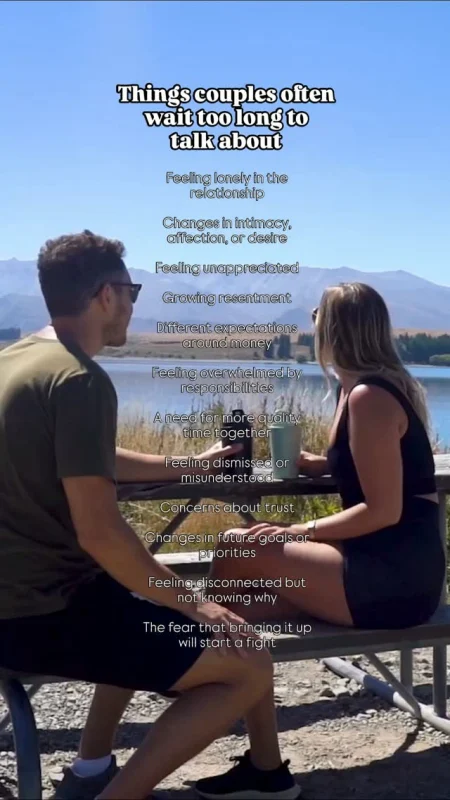



It's natural to feel attached. Relationships are a key component of our well-being, and when we crave closeness, we don't really want to let go. Yet sometimes, too much emotional attachment can begin to damage your life as well as your relationship. Making sense of attachment can be tricky, but the OurRitual experts are here to guide you.

- Emotional attachment is a natural and important part of relationships, but it becomes unhealthy when a person’s sense of stability, identity, or self-worth depends entirely on their partner
- Signs of unhealthy emotional attachment can include obsessive focus on the relationship, fear of separation, possessiveness, and difficulty allowing a partner independence
- When attachment becomes overly dependent, it can create relationship strain such as restricted autonomy, heightened emotional reactions, unresolved conflict, and loss of attraction over time
- Developing healthier attachment involves strengthening self-awareness, learning to regulate emotions independently, and allowing both partners space for personal interests and individuality
- With awareness, open communication, and sometimes professional support, couples can shift from anxious or dependent attachment patterns toward a more balanced and secure connection
What does "emotional attachment" even mean?
In the context of therapy, emotional attachment is the bond or connection you have with your partner that influences your own thoughts, feelings, and behaviours. It's not a bad thing in itself - after all, strong connections are essential for strong relationships; however, when our emotional attachment is too strong, things can start to go awry.
Some signs of healthy emotional attachment:
* You want your partner to be happy and feel happy when they are, even if this means they have some time away from you.
* You think about your partner throughout the day and care about their safety, but acknowledge that neither of you is 100% responsible for the other.
* You and your partner know that the relationship is safe, even if there are uncomfortable feelings between you two.
* You and your partner allow each other to pursue your own interests, friendships, and activities. You are able to not hear from your partner while they are busy without panicking.
* You and your partner respect each other's privacy, and both feel safe with each other's presence or absence.
Basically, healthy attachment revolves around the idea of: "We're good, that's great!" It can become unhealthy when this shifts to "I'm only okay if we're okay."
Signs of unhealthy emotional attachment are:
* You obsess over your partner: You devote most, if not all, of your time to them or the relationship, neglecting other needs or relationships.
* Your feelings depend on them: Your sense of worth, or your own feelings, rely solely on your partner's feelings or involvement in the relationship.
* You become possessive over them: You start to control your partner's behaviour, not allowing them to develop relationships or meaning without you.
* You do not allow them to be by themself: You are threatened by the idea of your partner having time to themself or feeling content when by themself or with others.
* You attribute who they are to your actions: You believe that your partner is a reflection of you. Although we all influence our partners, our partners are not who they are "because of" us.
Being wary of pathologising
Reading this list, you may realise that you or your partner has some features of unhealthy attachment. It's important to remember that unhealthy emotional attachment isn't a black-and-white thing and often changes over time. For example, certain situations (like mentioning an ex) may trigger unhealthy attachment, which then subsides after a few hours.
Importantly, awareness is crucial here. When we call attachment "unhealthy", we are not trying to pathologise the individual or call them a bad person. Attachment and the ways we connect are often the result of our experiences growing up, and many people did not have perfect role models.
That being said, unhealthy attachment is not suitable for relationships and must be addressed. In the case of sustained unhealthy attachment, or if there are difficulties working on it, it is best to contact a mental health or relationship professional.
A risky obsession
Unhealthy attachment can corrode a good relationship and transition into relational abuse. When one partner's emotional state is dependent on their feelings about the relationship, a few damaging things can result:
* Restricted autonomy. One partner may begin to avoid doing things they enjoy to placate the other. The relationship becomes restricted to things that are only "good for the relationship" in the eyes of the one with unhealthy attachment.
* Distorted emotional processing. When our sense of safety depends on the relationship, even minor tone fluctuations can be interpreted as a threat. Feelings of abandonment or rejection are triggered, creating a defensive atmosphere. Be wary of defensive listening here.
* A culture of crisis. Over time, unhealthy attachment can lead to one partner feeling like they need to soothe the other every time because of emotional reactions or threats. The more this happens, the more spontaneity and genuine care are deadened.
* Unresolved conflict. Because all disagreements feel like they are dangerous, conflict never has a chance to be resolved constructively. Everything gets smoothed over or avoided, leading to lingering conflicts.
* Loss of desire. Ultimately, unhealthy attachment leads to a loss of attraction from our partner because there is no longer a sense of mutual appreciation. One partner feels like a carer/peacekeeper, and the other's anxiety leads to a disingenuous connection.
The cruel irony of unhealthy attachment is that the obsession with an emotionally satisfying relationship is what prevents it from developing. Over time, an unhealthy attachment can push our partner away or create resentment.
Creating healthy attachment
The good news is that recovering from unhealthy emotional attachment often involves doing the opposite of the habits developed in healthy attachment. For example:
* Celebrate autonomy. Instead of seeing our partner's freedom as dangerous, acknowledge that it is not only their right but also a healthy thing that nourishes relationships. Freedom creates a sense of self, which can lead partners to rediscover and appreciate each other more.
* Self-soothing during uncomfortable emotions. The key here is accessing a sense of safety even while experiencing distressing attachment-based emotions. Perhaps our partner forgets to message - noticing the panic that arises (and the accompanying story) allows us to choose how to address our own feelings better.
* Create a culture of safety - to be yourselves. The more you let your partner be themselves safely (even if that involves moments of distance), the more you bake in secure attachment into your relationship. This also means finding the things you enjoy! Allow yourself to explore your own interests outside of the relationship.
* Practice conflict resolution and acceptance. Acknowledging and accepting that you and your partner will not always be happy together is key here. Practice reminding yourself that temporary unhappiness is not indicative of danger or no love.
* Create desire through mystery. Ever find that you feel more attracted to your SO when you've had a little time apart? This comes from a sense of mystery (even a small one) being injected back into the relationship. Practice letting your partner do their thing and come back to you when they are ready to connect.
Importantly, we want to ensure that these habits are sustained. Finding out the root causes with a professional is an essential step for many if unhealthy attachment is a sustained or recurring issue.
The beautiful thing about healthy attachment is that it fosters a relationship where both partners can be themselves and choose each other. When both partners have a sense of self that isn't fully dependent on the relationship, mutual attraction and constructive problem solving begin to arise. And that is worth working for.
We just need to be brave enough to take the first step.
.avif)
.avif)
.avif)


.avif)
.avif)