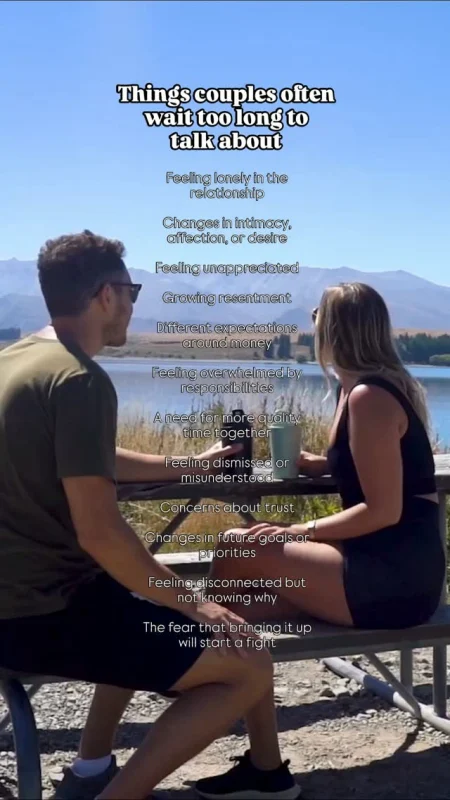



For most couples, there isn’t a dramatic moment where the communication suddenly breaks. It’s usually harder to pinpoint than that. Something just starts to feel off. Conversations that used to feel easy begin to feel tense, or guarded, or strangely exhausting.
Most couples don’t struggle because they lack communication skills. They struggle because communication in the relationship no longer feels emotionally safe.
In sessions, I often hear things like:“We used to talk about everything.”“Now it somehow turns into an argument.”

- Communication is the most common reason couples seek help — 79% of people in a recent OurRitual survey of 8490 respondents named it as a core issue.
- Emotional withdrawal and defensiveness often create a cycle where one partner pursues and the other pulls away, increasing distance over time.
- Creating safety improves conversations. Calm timing, active listening, and “I feel” statements help partners feel heard instead of blamed.
- Small intentional habits like regular check ins or writing thoughts down can break communication gridlock and rebuild connection.
- If conversations stay stuck or repetitive, structured support such as couples counseling can help uncover deeper patterns and create healthier communication.
When we slow things down, it’s rarely a single blow-up that causes the shift. It’s usually cumulative. A few conversations felt tense. A few moments of feeling dismissed. A few times, one person shut down, and the other leaned in harder.
Over time, partners stop responding only to what’s being said. They begin responding to what they anticipate will happen. The expectation shapes the tone before the conversation even starts.
That experience is more common than most couples realize. In fact, 57% of people seeking help with communication say they rarely feel heard by their partner. Once conversations stop feeling emotionally safe, even small discussions can start to feel tense or emotionally loaded.
If you’re wondering why communication feels harder than it used to, that usually tells me something hopeful. It means you notice the distance. And you don’t like it.
In this blog, we’ll discuss why you may be struggling to communicate with your partner and the best ways to fix it.
Why Communication Starts to Feel So Hard
When couples begin therapy, they typically describe the issue as content-based.
“We fight about money.”
“It’s always chores.”
“It’s parenting.”
But when we track an argument in real time, the topic often fades into the background. What stands out is the emotional reaction underneath.
I’ve worked with couples where one partner genuinely wants resolution and says, “Let’s just talk this through,” while the other quietly braces because, in their experience, “talking it through” has meant being criticized.
Both are sincere. Both have very different internal experiences.
Communication tends to feel strained when:
- One partner expects criticism.
- The other expects to be dismissed.
- Both are entering the conversation already tense.
That tension affects posture, tone, and pacing. It’s subtle, but it shifts the entire interaction.
The Science behind the "Stuck" Feeling
The reality is that when we are in a state of emotional flooding or survival mode, even the most polished "I-statement" will probably fail us. In those moments, our brains aren't looking for a better vocabulary; they are looking for safety. To move beyond the surface of "communication problems," we need a combination of knowledge about what works and the self-awareness to recognize the limitations of the moment. In real relationships, this often looks like noticing when your body is tense, realizing you’re becoming defensive, or recognizing that you’re no longer listening because you already expect the conversation to go badly.
These are not "tips" to be checked off a list, but practices to be lived every day for years. Over time, you begin to see that holding on to yourself and truly listening aren't as impossible as they once were. You might find that you’re able to see your partner’s perspective after an hour instead of a day, or that you can forgive yourself for being irritable.
That self-compassion is a critical turning point: when we can forgive ourselves for the limitations that are part of being human, it becomes much easier to be accountable for our flaws without falling into a pit of shame and unworthiness, and from there into defensiveness, counter-blame, or shutting down. While this work isn't always pleasant and takes a lifetime to master, it brings the sweetest reward: a deep, authentic, healing, and satisfying relationship with your partner.
Understanding the Cycle of Protection
When we look at why conversations become so difficult, we often fall into the trap of labeling our partner’s behavior as "stubbornness." But that word does us all a disservice because it implies a level of choice, as if our partner is consciously and deliberately opting to avoid a constructive path for selfish reasons. In reality, partners caught in a pursue-withdraw cycle are both desperately trying to find safety and avoid emotional pain that they are literally terrified of feeling.
Because we are storytelling beings, we feel a deep need to create an explanation for why our partner is acting this way. However, judging their response as "stubborn" only leads to more shame, and shame is the very thing that shuts down our curiosity and our ability to be courageously vulnerable. When we feel lonely or scared, we try to reach safety in the only way we know how. For some of us, that means reaching out and seeking connection through words and sharing feelings. For others, especially those whose experiences with closeness have felt hurtful in the past, a degree of solitude feels much safer.
As the late Dr. Sue Johnson often reminded us, our brains are quite literally wired for connection. When we sense a disconnect from our primary person, our primitive "standard operating procedure" for danger kicks in. We end up in a cycle where the more one person tries to pursue safety and connection, the more they trigger the other person's fears. The more a person tries to protect themselves from perceived danger, the more they reinforce their partner's pain and exacerbate the intensity of the pursuit.
Moving Beyond the "Supermarket" Conversations
When we find ourselves stuck in the mundane cycles of daily logistics, the first step toward change is to recognize that, on some level, both partners likely want more connection than they currently have. There is often a reality of "you can't see there from here" in relationship growth, which means you can’t and don’t need to see the finish line; you need to focus on the immediate progression in front of you.
It is very much like training at the gym. If you are working on a handstand, you first have to get comfortable being upside-down, then you strengthen your wrists, and then you gradually find your balance. Intimacy works the same way. The more you share something meaningful and have the positive experience of being heard, the more you build the strength to share something even deeper next time.
When you are ready to move toward a more meaningful connection, I suggest following these three foundational rules:
- Be kind: Share what is important, but also be judicious about what you choose to say. Speaking your truth does not mean you need to voice every thought that pops into your head, and in many cases, you almost certainly shouldn't.
- Be clear: Tell the truth, and also know that you have the permission to pause. If you are getting overwhelmed or if the listening becomes too uncomfortable, it is wise to take a break.
- Be respectful: These conversations require the same rules of civility as any other. Interrupting, name-calling, and character criticism should be off the table entirely. Only engage in these heart-to-hearts when you feel prepared to manage yourself reasonably well.
Emotional Flooding
There are moments in session where you can actually see someone become overwhelmed. Their breathing shortens. Their responses become clipped. Their eyes look distant.
At that point, continuing to problem-solve isn’t productive. Their nervous system is in defense.
That doesn’t mean they don’t care. It means they’re overloaded.
Old Experiences Showing Up in Present Arguments
It’s not unusual for someone to realize mid-conversation that their reaction isn’t only about what was just said. It connects to something older. Maybe growing up in a home where they felt unheard. Maybe a past betrayal. Maybe a history of feeling criticized.
Those older experiences don’t disappear just because we enter a new relationship. They shape sensitivity. They influence interpretation.
When those influences remain unnamed, they quietly steer conversations.
This is one reason many couples say they feel unheard in their relationship, even when conversations are happening regularly.
Why Emotional Safety Matters More Than Perfect Wording
Couples often ask for the “right” script.
“What’s the right way to say this so it doesn’t blow up?”
Language matters. But tone and regulation matter more.
I’ve seen conversations shift simply because one partner slows down and reflects back what they heard before defending themselves. Not to agree. Just to show understanding.
Sometimes the exchange sounds like this:
“That’s not what I meant.”
“I know. I’m telling you what it felt like on my end.”
That small distinction, intention versus impact, is where many arguments get stuck.
Safety grows through behaviors that signal, “I’m not here to win. I’m here to understand.”
That includes:
- Letting your partner finish.
- Naming when you’re feeling overwhelmed instead of disappearing.
- Speaking from your own experience instead of diagnosing theirs.
These are not dramatic interventions. But they change the emotional temperature of the room.
When Arguments Start to Feel Rehearsed
Couples sometimes say, “We’ve had this same fight a hundred times.”
When conversations feel repetitive, it often means something deeper hasn’t been acknowledged. Usually, an unmet need. Or a fear that hasn’t been voiced directly.
Inside the pattern, it feels personal. It feels like “You always…” or “You never…”
From a clinical perspective, it often looks more like two people protecting themselves in ways that unintentionally trigger each other.
Stepping outside that pattern without guidance can be difficult. When you’re in it, it doesn’t feel like a pattern. It feels like a character flaw in your partner.
What Actually Makes a Difference
In my experience, change rarely comes from a single perfect breakthrough conversation.
It comes from consistent adjustments in how conversations begin, pause, and end.
That might look like:
- Choosing timing more carefully.
- Saying, “I’m starting to feel flooded. I need ten minutes.”
- Setting aside structured time for emotional check-ins instead of squeezing them into chaotic evenings.
- Writing thoughts down beforehand to reduce reactivity.
None of these is a flashy tool. But they reduce escalation. And when escalation lowers, curiosity becomes more possible.
When Professional Support Becomes the Next Step
There often comes a point where effort isn’t the issue, as both partners are trying their best but find themselves getting stuck in the same emotional ruts over and over again. If you have tried the advice found in books or on social media and haven't seen the change you were hoping for, or if you feel a growing frustration that you aren’t making progress toward the type of relationship you actually want, it may be a great idea to look into help from a professional.
That urgency is real for many couples. Research shows that 71% of couples struggling with communication rate the issue as urgent to address, which makes sense when communication problems begin affecting emotional safety, intimacy, and daily connection.
Whether you are worried about the viability of your relationship or you are not convinced that you and your partner want the same qualities in a relationship, bringing in a professional can provide the distance needed to see your dynamic clearly. Sometimes, even just a few sessions are enough to help a couple get unstuck and rediscover their connection. The quality of your relationship has such a profound impact on your life that investing in it is a highly leveraged choice.
Once you are sitting in the room with a professional, the most important thing you can do is be as honest as possible with yourself and with the therapist so that the most vital information is shared. Struggling to communicate doesn’t mean you are incompatible; it usually means that protective habits have temporarily taken the lead. With awareness and the right support, those habits can shift. Once the dynamic becomes visible, it stops feeling like your partner is the enemy and becomes a shared challenge you can face together.
A Closing Reflection
Struggling to communicate with your partner doesn’t automatically mean you’re incompatible. More often, it means protective habits have taken over.
With awareness and sometimes support, those habits can shift.
I’ve seen couples move from defensiveness toward curiosity. Not because conflict disappeared, but because they learned to recognize the dynamic they were both caught in.
And once the dynamic becomes visible, it stops feeling like the other person is the enemy.
If you are struggling with repetitive arguments, emotional distance, or feeling unheard in your relationship, OurRitual offers exclusive content to help you grow, learn, and improve communication. In parallel with your weekly Expert sessions, all OurRitual members are assigned to a Pathway, a series of videos, exercises, and tools designed to help you maximize progress between sessions.

.avif)

.avif)
.avif)
.avif)
.avif)
.avif)