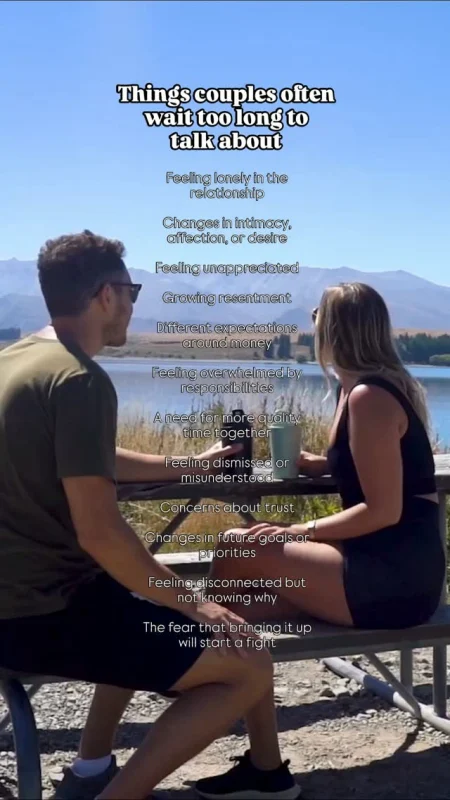





Communication problems are one of the most common reasons couples seek help. In therapy, partners rarely say, “We don’t love each other.” They say, “We keep having the same fight,” “We don’t feel heard,” or “Every conversation turns into an argument.” Those patterns can wear down trust, closeness, and even the willingness to keep trying.
The encouraging part is that communication skills for couples can be learned. Research and clinical experience both show that healthier communication is not about saying the perfect thing. It is about building habits that help both people feel safe, understood, and respected. According to the Gottman Institute, destructive patterns like criticism, defensiveness, contempt, and stonewalling can seriously damage connection over time. They also emphasize that couples can improve outcomes by learning specific repair and communication tools.
In practice, that is exactly what we see in sessions. A couple may come in arguing about chores, texting, intimacy, parenting, or time together. Underneath the surface, the issue is often the same: one partner feels unseen, and the other feels blamed. Once the communication pattern changes, the relationship often begins to change with it.
This article breaks down five communication problems and solutions that work in real relationships. You will also see practical examples, research-backed guidance, and communication exercises for couples that can help create steadier, more productive conversations.

- Communication problems often lead to emotional distance and repeated conflict, but skills like active listening, clear emotional expression, and structured dialogue can rebuild connection
- Using “I-statements” reduces defensiveness by focusing on your feelings and impact rather than blaming your partner
- Emotional regulation is a critical part of communication, as attempting to solve problems while "flooded" or overwhelmed usually leads to escalation. Taking a respectful 20-minute pause allows both partners to settle their nervous systems before returning to a productive dialogue.
- Professional support through couples therapy for communication issues provides the structure and expert guidance needed to break long-standing negative habits. OurRitual combines sessions with over 300 experts and app-based exercises to help couples build lasting communication skills between sessions.
Why communication problems happen in the first place
Most communication problems do not begin with bad intentions. They begin with stress, assumptions, emotional triggers, and habits people learned long before the relationship started. One partner may come from a family where conflict was loud and immediate. The other may have learned to stay quiet and avoid tension at all costs. Put those two people in the same disagreement, and they are likely to misunderstand each other fast.
Other reasons, such as external stress matters too. Work pressure, parenting demands, finances, military deployment, long distance strain, or recovering from betrayal can all narrow a person’s ability to listen calmly. In those moments, even loving partners can become reactive.
This is one reason couples therapy for communication issues can be highly effective. It helps slow the process down and identify what is actually happening beneath the argument.
At OurRitual, this support is designed to continue between sessions too. Couples work with one of more than 300 experts with years of training and experience, and they can also use the app for exercises and video content that help reinforce what they are learning in therapy. That combination of expert guidance and tailored support between sessions can make progress more consistent.
1. Communication skills for couples start with active listening
Active listening means you are trying to understand your partner’s message and emotional experience before responding. That sounds simple, but it is not easy when emotions are high.
The Gottman Institute’s guidance on effective communication and their communication exercises for couples both emphasize listening with full attention, reflecting back what you heard, and reducing defensiveness. Those practices help couples move from reactive exchanges to more meaningful dialogue.
Here is what this looks like in a session:
A wife says, “When you answer work emails during dinner, I feel like I’m eating alone.”
Her husband replies, “So what you’re saying is you feel disconnected when I stay on my phone at dinner, and that hurts.”
That response does not solve the whole issue. It does something important first. It makes her feel heard.
Want a practical starting point? Try this:
One person speaks for two minutes
The other person does not interrupt
The listener reflects back the main point and emotion
The speaker confirms or clarifies
This is one of the most effective communication exercises for couples because it interrupts the usual pattern of attack and defense.
2. Communication problems often depend on how the conversation starts
Many relationship conversations fail in the first sentence. If a discussion opens with blame, exaggeration, or stored-up resentment, the other person usually hears threat before they hear content.
This shows up in everyday exchanges:
“You never listen to me”
“You always shut me out”
“You clearly do not care”
Those statements usually come from pain. They still increase defensiveness.
A more effective approach is a soft startup. Instead of accusing, speak from your experience, stay specific and use "I statements".
For example:
“I felt alone when we barely talked last night”
“I want us to figure out a better way to handle this”
“Can we talk about what happened earlier? I do not want this to keep building”
The Gottman article on solving relationship communication problems highlights softened startups and repair attempts as key tools for reducing escalation. In therapy, this matters a lot. Couples who learn to begin hard conversations gently usually make faster progress than couples who focus only on what they want to say.
Ask yourself: if your partner heard your opening line, would they feel invited into a conversation or pushed into a defense?
That question alone can change the tone.
These work better with practice and a bit of guidance.
3. Communication exercises for couples help turn vague frustration into clear expression
A lot of couples are arguing about unclear messages. One person hints. The other misses it. Then both people feel frustrated.
This is where direct emotional language helps. Clear communication skills for couples include saying what you feel, what happened, and what you need without making your partner guess.
In therapy, we often help couples shift from global statements to specific ones.
Instead of: “I can’t do this anymore.”
Try: “I’ve been feeling overwhelmed and disconnected for the last two weeks, and I need more check-in time with you.”
Instead of: “You do whatever you want.”
Try: “I felt hurt when plans changed and we did not talk about it first.”
Specific language gives the other person something real to respond to.
According to the Therapy Central, lack of communication in a relationship often shows up through withdrawal, repeated misunderstandings, emotional distance, and unresolved tension. In clinical work, those signs usually improve when couples become more direct and more emotionally accurate.
A simple exercise:
Finish the sentence, “I feel ___ about ___ and I need ___”
Keep it to one issue at a time
Stay with the present issue instead of bringing in five past conflicts
This structure helps couples slow down and speak with clarity.
4. Active listening for couples works best when both people learn to regulate before responding
Couples often try to solve problems while they are physiologically overwhelmed. That usually fails. When someone is flooded, they are more likely to interrupt, shut down, say something harsh, or misread neutral comments as criticism.
This is why emotional regulation is part of communication, not separate from it.
Research consistently shows that relationship quality and communication quality are closely linked. A widely cited review published in the Journal of Marriage and Family found strong associations between communication processes and relationship satisfaction across studies: Communication and Relationship Satisfaction. That does not mean every conflict needs to be calm from the start. It does mean couples benefit when they know how to pause, settle, and return.
In a session, I might say to a couple, “You are both trying to talk while your bodies are in fight-or-flight mode.” Once they understand that, they stop treating a pause as avoidance and start treating it as skillful timing.
A good reset can include:
Taking a 20-minute break
Breathing slowly
Walking without rehearsing your argument
Agreeing on a time to return to the topic
What matters is that the pause is respectful and temporary. “I need 20 minutes so I can come back calmer” is very different from storming out or going silent for hours.
This is one of the most important communication problems and solutions couples overlook. Timing matters. Tone matters. Nervous system state matters.
5. Couples therapy for communication issues creates structure
What if you have already tried the tips, and you still end up in the same argument every week? That is usually a sign that the issue needs more structure, more support, or both.
Couples therapy for communication issues can help partners identify repeating cycles, understand triggers, and practice new responses in real time. It also gives couples a place to talk about difficult topics like trust, intimacy, boundaries, infidelity, toxic dynamics, long distance stress, and conflict resolution with guidance from someone trained to help them stay engaged without escalating.
This is especially useful when one or both partners say:
“We talk, but nothing changes”
“Every serious conversation turns into a fight”
“We love each other, but we cannot communicate well”
How OurRitual Supports Communication Skills
At OurRitual, couples can work with experts who bring years of training and compassionate care to each session. Then, between sessions, they can continue building skills through app-based exercises and video content designed to support progress. That ongoing structure matters because communication habits improve through repetition, reflection, and feedback.
For many couples, therapy is not a last resort. It is a practical way to stop repeating painful patterns and start learning better ones.
So what communication problems and solutions actually work in real life?
The most effective communication skills for couples are usually the least flashy:
listen to understand
start gently
speak clearly
regulate before responding
get support when the pattern keeps repeating
These skills work because they make conversations feel safer. Safety is what allows honesty, accountability, and repair.

OurRitual is designed to address the unique challenges of today’s relationships. The platform offers weekly expert-led sessions and digital exercises aimed at improving communication.
Here’s how it works: Couples can participate in 20- to 40-minute virtual sessions with licensed professionals, available around the clock. These sessions are paired with self-guided exercises on the app, which include curated resources, progress tracking, and actionable steps.
Join the OurRitual today and take the first step toward clearer communication, stronger trust, and a healthier relationship

.avif)

.avif)
.avif)
.avif)
.avif)
.avif)