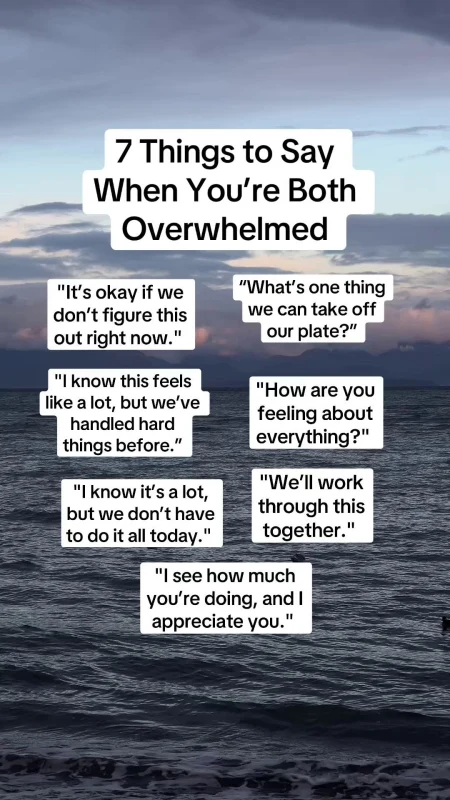



Blending families involves an almost countless number of relationship dynamics to navigate. On top of partners, children, and parents, a whole range of other group dynamics can develop, creating tension and uncertainty. Finding ways to navigate blended family issues is essential for a happy partnership.
In this article, we’ll walk through the most common blended family challenges, what’s often happening beneath the surface, and practical ways to move through them, along with how OurRitual can support you as you build a healthier, more aligned family dynamic.
What is a Blended Family?
A blended family is a family formed by two partners who come together, at least one of which has children from a previous relationship. Often, these dynamics and family logistics might involve former partners or family members.
Blended families can function like little societies. A whole range of beliefs, communication styles (and senses of humour!) come together to form a diverse and unique culture that can enrich the lives of all involved. However, as in many societies, difficulties can arise between and within groups, including:
* Rivalry, conflict, and competition (especially between siblings)
* Strained relationships between step-parents and step-children
* Difficulties with co-parenting or ex-partners
* Role confusion ("Who does the discipline?", "Who 'counts' as a parent?")
* Logistic issues such as managing finances and housework
The bottom line: it can get really tricky, really fast. What can start as something aspirational can feel like an endless to-do list, and it can put a strain on you and your relationship.
The good news is that many things can be done to improve blended family dynamics and learn something new in the process. The only catch is that we have to be ready to adjust our expectations.
What Does Blended Family "Success" Look Like?
It may be a good idea to talk about this with your partner.
Sometimes, we get so focused on putting out little spot fires that we forget to zoom out and check in with our intention. Extending that small society metaphor, what kind of culture do you and your partner want your blended family to have?
Some ideas:
* A place of collaboration and respect
* A safe haven for children
* Somewhere where everyone feels like they have a role and can contribute
* A home where everyone feels accepted
* A space where accountability and honest conversations are encouraged
It's important to recognize that we will not consistently achieve the picture-perfect dynamic in a blended family (or any family, for that matter). We are never going to reach a point where we dust off our hands, cross the final item off the to-do list, and kick back. But knowing the intention is a valuable way to ensure everyone is on the same page.
Children do not have the ability to understand nuance like adults. Having things clear and simple is essential when trying to enforce new rules. Likewise, you and your partner being aligned is crucial to parenting, especially with step-children.
So before you continue, define success. It's going to be your compass as you navigate this new territory.
Embrace Flexibility
Just as we need to accept that our intentions are always going to need to be lived, we also need to be flexible about how every family member contributes and how long we expect successful blending to take.
Blending two families is rarely an instantaneous or smooth process. Everyone has their own ways of expressing love and contributing to the family. An extra layer of difficulty can arise when we become too rigid about how we expect love to be expressed.
You can lean into flexibility by:
* Acknowledging various communication styles. For example, maybe your stepchild isn't talkative, but you are. Remember that even their choosing to sit nearby you is a sign of trust and wanting to connect.
* Being versatile in showing affection. Your default way of helping may be to provide practical support or problem-solving. You may need to begin practicing other ways of communicating, such as reflective listening or relating.
* Pausing before reacting. Sometimes, a single breath is the difference between a serious or a light-hearted conversation. By pausing, you practice sitting with the inevitable uncertainty of family dynamics. This can be a superpower.
* Keeping expectations in check. It's easy to treat children as "small adults," expecting them to understand what we do. Remembering that our parenting styles are often the result of our own biases, that mistakes will be made, and that we can only do our best is key.
Conflict as a Portal to Understanding
Rivalry and competition can become rife in blended families. When two families come together, children can begin to compete for attention, love, or even resources, leading to jealousy, tension, and conflict.
Conflict is a natural part of all relationships, so finding and modeling strong conflict-resolution skills is essential. Rather than viewing conflict as something to avoid, it can be useful to change your approach to conflict. Ask yourself: What do I think is going on beneath the surface? What needs aren't being met? What strong emotions are driving this behavior?
Conflict can also occur between the parents themselves. Different parenting styles, values, and expectations can create friction. Having regular check-ins with your partner about what's working (or not) is essential. Many parents consider therapy a safe space to discuss parenting difficulties.
Consistently Sharing Rules and Responsibilities
Clarity around rules and responsibilities is one of the most practical ways to reduce conflict in blended families.
When expectations shift depending on which parent is present or which household a child is in, confusion and resentment tend to follow.
Work with your partner to establish:
* Shared household rules that apply to all children consistently (or are at least equitable depending on their age and abilities).
* Clear information around discipline and decision-making.
* Transparent communication about why certain rules exist.
* A "united front", showing the children consistency in parenting.
Knowing When to Get Help
There's a difference between the everyday trials and tribulations of blended families and the severe difficulties they face. When your blended family starts to impact your mental or physical health, it's time to seek support.
There are many ways to get help when it comes to blended families, such as seeing a family or individual therapist. These professionals can help you and your family work better together, or even help you find effective coping strategies.
A common limitation of these approaches is the scope of the intervention: while family therapy is effective, it requires everyone to be available and willing to participate. Likewise, individual therapy, although requiring only yourself, can be somewhat limited in terms of effectiveness. You may learn to cope, but not fix underlying issues that are out of your individual control.
Often, the most effective blended family intervention is couples counseling or therapy. Effective blended family parenting relies on both parents being actively involved. Couples therapy can be a safe forum for talking through parenting difficulties and conflicts, though it relies on both you and your partner being available.
A More Aligned Future is Possible
The final tip for shaping a healthy, happy blended family is that progress is possible. We just need to be prepared to accept it as it comes. Every single interaction is an opportunity to move things in the right direction:
* Every sibling fight resolved can teach empathy.
* Every small gesture of affection can create emotional safety.
* Every acknowledgment can make people feel seen.
Be open, be curious, and seek help when you need it. Trust the process and your own good intentions, and the rest will follow.
FAQs
How do I respond when children in my household question new rules?
It's important to recognize that children may struggle to understand why rules are changing, so clear and compassionate communication is needed.
Reassure them that the changes are not reflective of them and that all parents involved love them very much. Explain simply: "We're all learning how to live together as a family, and these rules help everyone feel safe and respected."
What do I do when my ex is saying negative things about my parenting?
First of all, do not involve children in the conflict; if you do, address it immediately. Co-parenting can lead children to question parenting styles, and it's important to normalize any confusion they may have: "I understand that rules are a little different here. We are both trying to support you in the best way we can." Focus on what you can control (your behavior) over what you cannot (your ex's behavior).
How long does it typically take for a blended family to feel "normal"?
This isn't an exact science; however, research often indicates that it takes roughly three to five years for a blended family to adjust fully.
That might sound like a long time, but remember: you're building entirely new relationships and dynamics from scratch. Be patient with the process and celebrate small wins along the way.
What if my stepchild refuses to accept me as a parental figure?
This is incredibly common and doesn't necessarily mean you are doing anything wrong.
Children often need time to process their feelings about their parents' separation before they can accept a new adult in their lives. Focus on building trust genuinely and organically, rather than forcing things. Sometimes, being a reliable presence is all we can do during this stage.