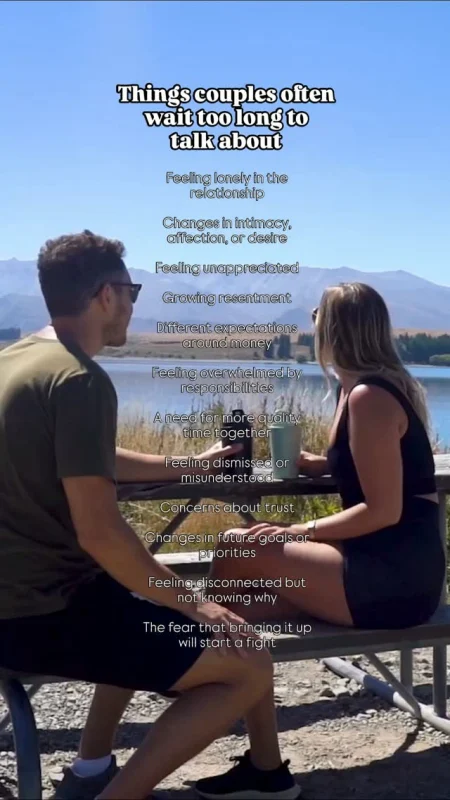







What Is Relationship OCD (ROCD)?
Most people have occasional doubts about their relationship. You might wonder whether you're compatible with your partner, question whether you're making the right decisions, or worry about the future from time to time. These thoughts are a normal part of being human.
Relationship OCD (ROCD) is different.
ROCD is a form of obsessive-compulsive disorder that centers on relationships. It involves persistent, intrusive thoughts, doubts, or fears about your partner, your feelings, or the relationship itself. These thoughts can become so overwhelming that they interfere with daily life, emotional well-being, and the ability to enjoy an otherwise healthy relationship.
It takes people with OCD an average of 14 years to get diagnosed, years in which relationships suffer immensely. Diagnosing and understanding ROCD can help people recognize that what they're experiencing may not be a relationship problem at all, but rather an anxiety-driven pattern that deserves support and treatment.
Signs and symptoms of relationship OCD
ROCD often involves persistent doubt about the relationship. At other times, the doubt might only feel significant when a big decision needs to be made, like getting married or trying to have children.
Some people become preoccupied with whether they truly love their partner or whether the relationship is right, while others focus on whether their partner loves them or is losing interest. These thoughts can feel urgent and significant, making them difficult to dismiss even when there is little evidence that anything is wrong.
Common symptoms of ROCD may include:
- Constantly questioning whether the relationship is right
- Repeatedly analyzing feelings toward a partner
- Obsessing over perceived flaws in a partner
- Constantly questioning whether your partner truly loves or values you
- Looking for reassurance that the relationship is secure
- Analyzing texts, conversations, or behaviors for signs of rejection
- Comparing the relationship to other relationships
- Seeking reassurance from friends, family, therapists, or the internet
- Frequently checking whether feelings of love, attraction, or excitement are present
- Feeling intense anxiety when uncertainty arises
- Struggling to enjoy positive moments because of ongoing doubts
- Mentally reviewing conversations or interactions for signs that something is wrong
Many people with ROCD recognize that their thoughts may be excessive, yet they still feel compelled to engage with them. These behaviors, often called compulsions, may reduce anxiety in the moment but tend to reinforce the cycle over time. Unfortunately, the more attention the doubts receive, the stronger they often become.
How ROCD affects your partner and relationship
ROCD doesn't just affect the person experiencing it, it can also create stress within the relationship itself.
Partners may feel confused when they are repeatedly asked for reassurance or when concerns seem to appear despite things going well. They may begin to feel as though they are constantly being evaluated or tested.
Over time, the cycle can become exhausting for both people.
A person with ROCD may find themselves repeatedly asking questions such as:
- "Do you really love me?"
- "Are we right for each other?"
- "What if you're losing feelings for me?"
- "How do I know we're meant to be together?"
- "Do you think other couples are happier than we are?"
- "What if we're making a mistake?"
Although these questions can vary, they are often driven by the same goal: finding certainty in a situation that contains inevitable uncertainty.
Although reassurance may temporarily reduce anxiety, the relief usually doesn't last. The doubts often return, leading to another round of questioning and reassurance-seeking.
This can create a difficult dynamic where both partners feel stuck.
ROCD can also make it harder to be emotionally present. Instead of enjoying connection, affection, and shared experiences, much of the person's mental energy becomes focused on monitoring the relationship for signs of danger or certainty.
The result is often increased stress, distance, and frustration, even in relationships that are loving and healthy.
This increase in painful feelings in the relationship then leads to more doubt: “if i’m not enjoying the relationship, then maybe it is wrong”, thus making the cycle of doubt ever more painful.
What causes relationship OCD?
Like other forms of OCD, ROCD is believed to develop through a combination of biological, psychological, and environmental factors.
Researchers believe that people with OCD tend to have a heightened sensitivity to uncertainty and a stronger tendency to interpret intrusive thoughts as meaningful or threatening.
Relationships naturally involve uncertainty, which can be especially difficult for people who struggle with OCD.
No one can know with complete certainty how they will feel in the future, whether a relationship will last forever, or whether they have found the "perfect" partner. Likewise, no one can receive constant proof that their partner will always feel the same way. Healthy relationships require a certain level of trust despite uncertainty.
For most people, this uncertainty is manageable.
For someone with ROCD, however, uncertainty can feel intolerable.
Researchers believe ROCD develops through a combination of genetic, biological, and psychological factors. Certain traits and thinking patterns may make someone more vulnerable to ROCD or help maintain symptoms over time.
These may include:
- A personal or family history of OCD or anxiety disorders
- Perfectionistic thinking
- A strong need for certainty
- Fear of making mistakes
- Unrealistic beliefs about love and relationships
- High sensitivity to intrusive thoughts
Social media, movies, and cultural messages about soulmates can sometimes make things worse by promoting unrealistic expectations about what healthy relationships should feel like.
Is it ROCD or is the relationship actually wrong for you?
This is often one of the most difficult questions people with ROCD face.
The reality is that every relationship has imperfections. No partner will meet every need, and no relationship feels exciting, effortless, or certain all of the time.
People with ROCD often become preoccupied with achieving absolute certainty before they can feel safe. The problem is that certainty rarely exists in relationships.
One clue that ROCD may be involved is the presence of repetitive obsessional thinking. Instead of identifying a specific relationship issue and working through it, the person becomes trapped in endless analysis.
Another clue is that answers never seem to stick.
A friend may reassure them. Their partner may reassure them. They may even convince themselves temporarily that everything is fine. Yet the doubts return again and again.
This doesn't mean that every concern should automatically be dismissed as ROCD. Healthy relationships still require honesty, self-reflection, and attention to genuine problems.
The key difference is that ROCD tends to create ongoing anxiety-driven doubt that persists regardless of evidence, reassurance, or relationship quality.
How relationship OCD is treated
The good news is that ROCD is highly treatable.
One of the most effective treatments is Exposure and Response Prevention (ERP), a specialized form of cognitive behavioral therapy often considered the gold standard for OCD treatment.
ERP helps people gradually learn to tolerate uncertainty without engaging in compulsive behaviors such as reassurance-seeking, checking, comparing, or overanalyzing.
Treatment may also include:
- Cognitive Behavioral Therapy (CBT)
- Acceptance and Commitment Therapy (ACT)
- Mindfulness-based approaches
- Medication when appropriate and recommended by a healthcare provider
Rather than trying to eliminate every doubt, treatment focuses on changing the person's relationship with uncertainty.
Over time, many people learn that they do not need complete certainty in order to have a meaningful, loving relationship.
How couples can navigate ROCD together
ROCD can feel isolating, but couples often benefit from approaching it as a shared challenge rather than an individual flaw.
For the partner experiencing ROCD, learning to recognize reassurance-seeking behaviors can be an important step toward breaking the cycle.
For the other partner, understanding that the doubts are often driven by anxiety rather than a lack of love can help reduce feelings of personal rejection.
Helpful strategies may include:
- Learning about ROCD together
- Developing healthier ways to respond to reassurance-seeking
- Practicing open, nonjudgmental communication
- Creating space for uncertainty without rushing to solve it
- Focusing on shared values and connection rather than constant evaluation of the relationship
It's important to remember that neither partner caused ROCD, and neither partner is responsible for fixing it alone.
With support and treatment, many couples learn to navigate these challenges successfully and build stronger emotional resilience together.
When to seek professional help
If thoughts about your relationship are consuming hours of your day, causing significant distress, affecting your ability to function, or creating ongoing strain in your relationship, it may be time to seek professional support.
Working with a mental health professional who understands OCD can help you identify what's happening and develop healthier ways of responding to intrusive doubts.
The earlier treatment begins, the easier it often becomes to break the cycle and regain a sense of confidence, flexibility, and peace within your relationship.

.avif)

.avif)
.avif)
.avif)
.avif)
.avif)